Honoring Oscar Theis’s Legacy
A glimpse into the life and service of my father during WWII.
Remembering Oscar
A tribute to my father’s bravery and life as a WWII fighter pilot, preserving his story with respect and honor.
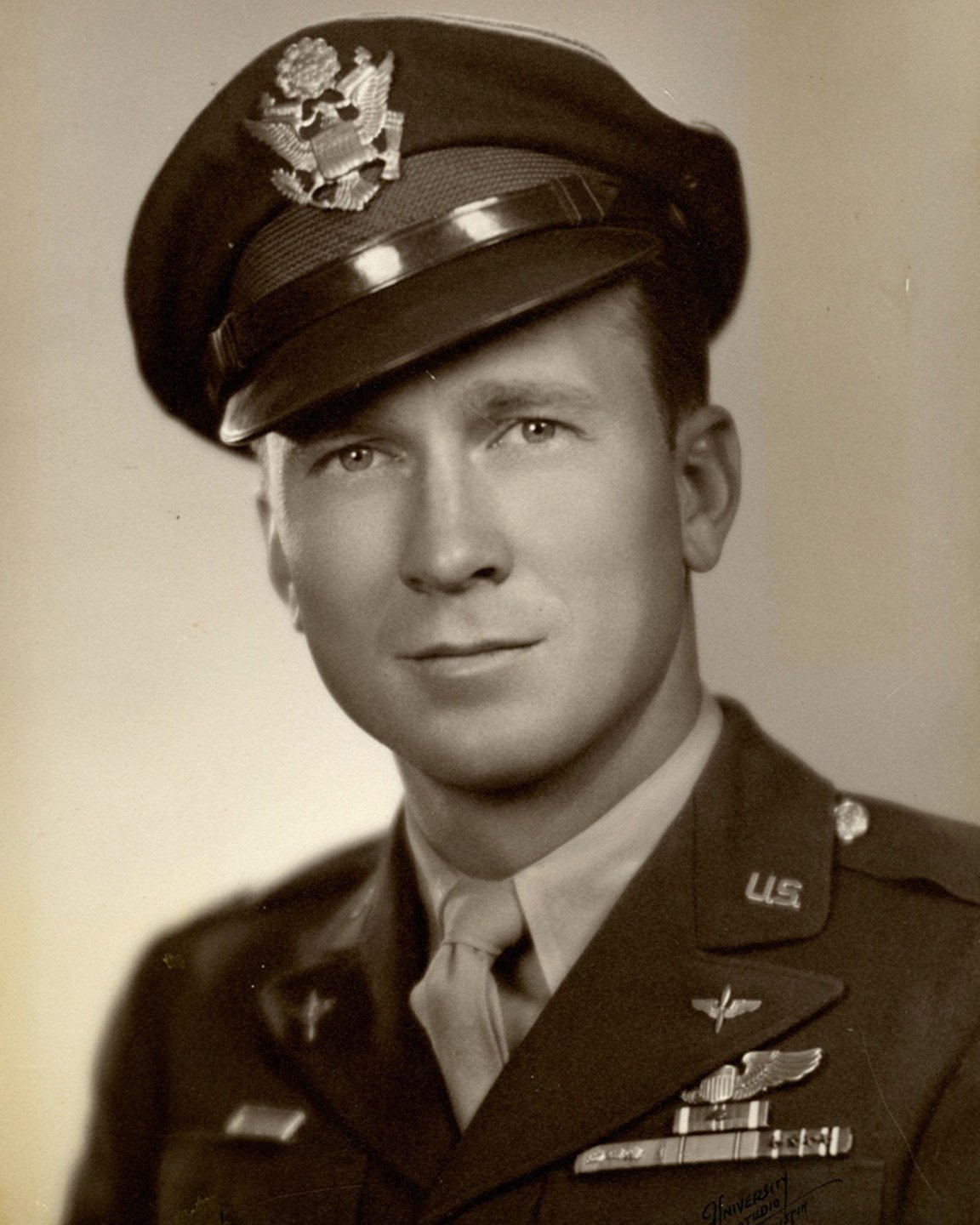
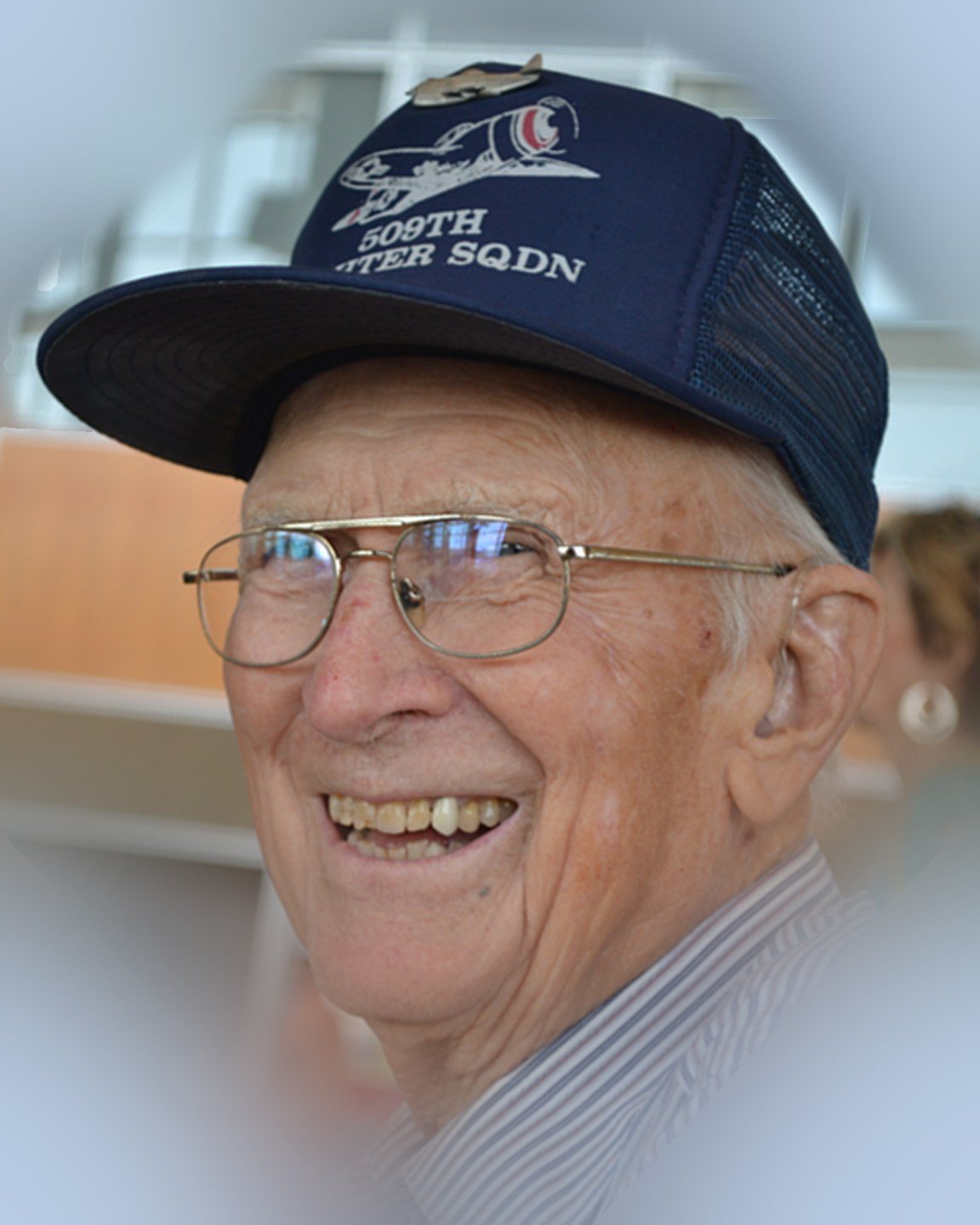
Oscar records his autobiography in this audio recording
Birth & Childhood: Oscar Tice was born on January 6, 1920, in a three-room farmhouse on his grandfather’s farm with no electricity, indoor plumbing, or running water.
Education & Farm Life: He grew up during the Great Depression, spoke both English and German, and attended St. Paul Lutheran School. His family moved near San Gabriel, Texas, in 1933, where he graduated high school in 1937 and worked on his father’s farm using mules and later a tractor.
Pre-WWII Military Service
Enlistment: In 1939, he convinced his parents to allow him to enlist in the Army Air Corps after being promised assignment to nearby Randolph Field in San Antonio.
Randolph Field Maintenance: Assigned to the base flight as an airplane mechanic and eventually crew chief on a Northrop A-17A, he serviced staff officer planes—including classic aircraft like the Martin B-10 and Douglas B-18.
Promotions & Social Life: His parents bought him a 1940 Chevrolet, making him popular for driving church friends around San Antonio, and he was later promoted to a squadron aircraft inspector.
Pilot Training
Enlisted Pilot Program: After failing an initial cadet eye exam due to astigmatism, he was accepted into the Enlisted Pilot Program in early 1942.
Training Pipeline: He completed induction at Santa Ana, primary flight training in a Ryan PT-21 at Hemet, basic training at Bakersfield, and advanced flight/gunnery training at Luke Field and Gila Bend, Arizona.
Commissioning & Las Vegas Assignment: Discontinued as a Staff Sergeant Pilot, he graduated on December 9, 1942, as a Flight Officer (and later earned a commission). He spent a year at Las Vegas flying T-6 trainers and target tow planes for bomber gunnery students, accumulating over 1,000 flight hours.
Fighter Transition: With the help of a base commander’s secretary who wrote a transfer request, he was sent to Richmond, Virginia, to transition into the P-47 Thunderbolt and Norfolk, Virginia, where he qualified as a sharpshooter.
WWII Overseas Combat
Deployment: Traveled to Glasgow, Scotland, aboard the Queen Elizabeth and was assigned as a replacement pilot to the 405th Fighter Group, 509th Squadron, stationed at a grass airfield in Christchurch, England.
Combat Record: Flew 117 total combat missions in the 9th Air Force providing ground support, dive-bombing, and bomber escorts.
Key Combat Incidents:
Damaged over France: During an aborted escort mission in low weather, he was heavily engaged by coastal flak near the French coast; despite taking anti-aircraft hits to his fuselage, wing, and canopy, he landed safely at an RAF base in England.
Friendly Fire & Forced Landing: While strafing near Cherbourg, he inadvertently fired two rounds into his squadron commander’s wing before taking a large-caliber hit to his engine; he reached an uncompleted Allied strip, opened his gun camera to expose the film, and safely landed.
Low-Altitude Blast: Flying behind a lead element during a low-level bombing mission near Metz, he flew directly into the explosion of preceding 8-second delay bombs, showering his P-47 with bricks and debris that ended up in his engine.
Fuel Tank Rupture: Took a direct hit to his fuselage fuel tank near Metz; the aircraft leaked a stream of fuel over the wing but held together long enough to return to base, though the new P-47 had to be scrapped.
Control Jam Landing: Experienced a jammed control stick after attacking a German tank, requiring a high-speed (75 mph over normal) flat landing, where he intentionally ground-looped the aircraft using the right brake to stop before hitting trees at the end of the runway.
Surrender (May 8, 1945): Highly decorated German ace Hans-Ulrich Rudel surrendered to U.S. forces at Kitzingen Airfield to avoid Soviet capture.
Technical Exchange: Bilingual U.S. pilot Oscar Theis acted as a translator while Rudel demonstrated the cockpit controls of a surrendered Focke-Wulf Fw 190.
Mock Dogfight (May 10, 1945): Theis flew the captured Fw 190 in a simulated aerial duel against a U.S. P-47 Thunderbolt. Theis quickly outmaneuvered the heavier P-47, proving the Fw 190’s superior agility.
Aftermath: Rudel relocated to South America and actively supported neo-Nazi networks until his death. Theis returned to Texas and retired as an Air Force Lieutenant Colonel in 1980.
Activation and Training
- The unit was originally activated on March 1, 1943, at Drew Field, Florida, as the 624th Bombardment Squadron (D).
- On August 15, 1943, it was redesignated as the 509th Fighter Bomber Squadron and assigned to the III Fighter Command.
- The squadron initially flew A-24 and P-39-Q-5 aircraft before transitioning to P-47s by December 1943.
- Training operations in Florida and South Carolina included dive-bombing, escort missions, and aerial gunnery.
- Major Thornton J. Mostyn commanded the squadron during its stateside training.
European Theater Deployment
- The squadron departed the United States in February 1944, docking in Liverpool, England, on March 6, 1944.
- The unit was stationed at Station 416 in Christchurch, Hants.
- Upon arriving in the European Theater of Operations (ETO), the squadron’s strength was 39 officers and 252 enlisted men.
- The first month in England was dedicated to non-combat training and 48-plane familiarization fighter sweeps over the continent.
Combat Operations
- The squadron’s first combat mission occurred on April 11, 1944.
- The unit inflicted its first damage on the enemy on April 26, 1944, by scoring 24 hits on a railway marshalling yard at Nantes, France.
- Primary combat activities included dive-bombing airdromes, escorting medium bombers, and strafing enemy trains and airfields to interdict potential invasion areas.
- In May 1944, Major Paul E. Gardiner replaced Major Mostyn as Squadron Commander.
Squadron Culture
- The squadron’s early personnel, aircraft, and equipment at Drew Field were utilized to film scenes for the movie “A Guy Named Joe,” starring Irene Dunne.
- Squadron members frequently wrote and sang song parodies, including popular lamentations about the difficulty of earning the Distinguished Flying Cross (DFC) within the Ninth Air Force.
Resources on this site
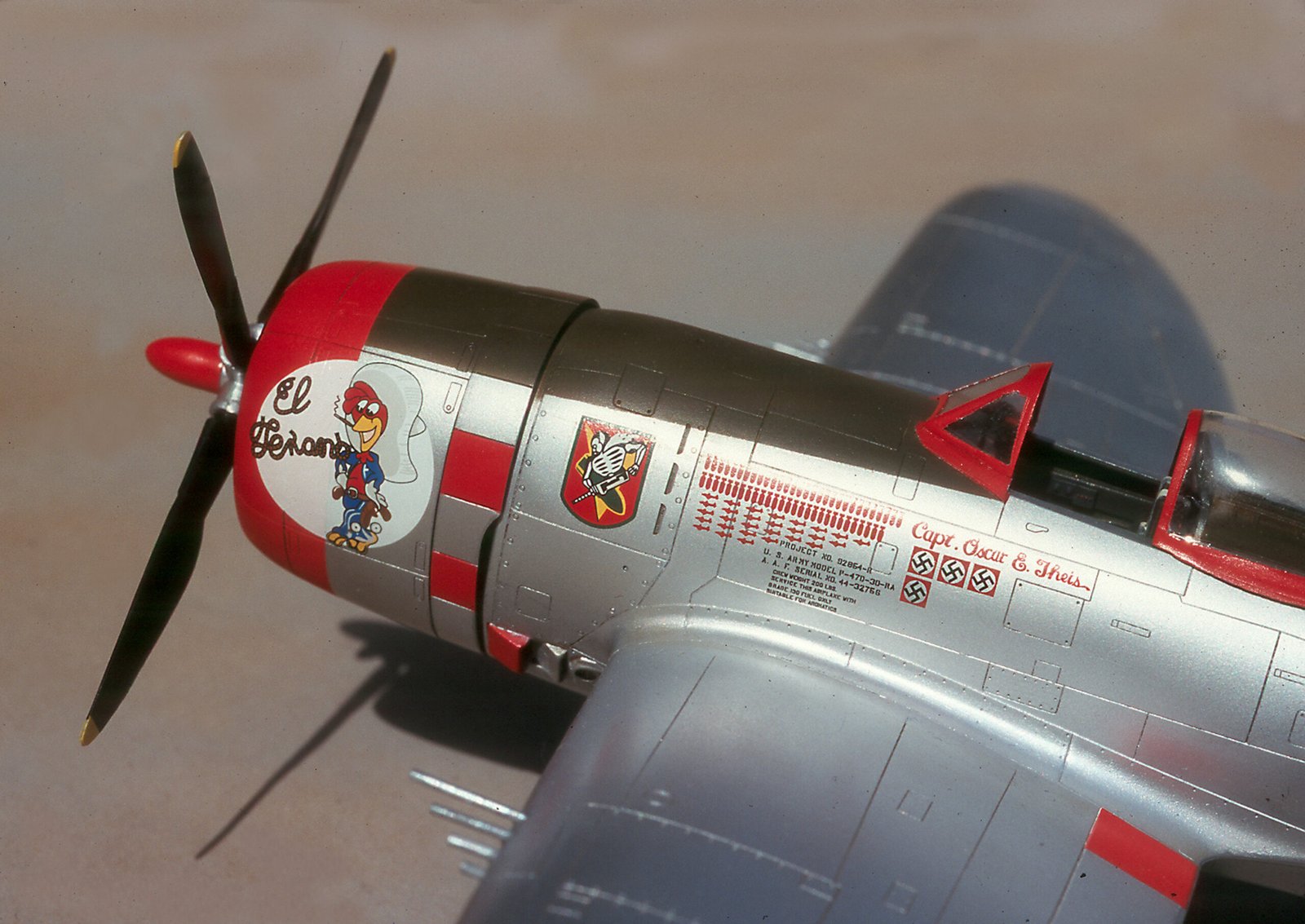
Detailed military history showcasing missions and accomplishments.

Engaging audio interviews capturing personal stories and memories.

A memorial guestbook for tributes and heartfelt visitor reflections.